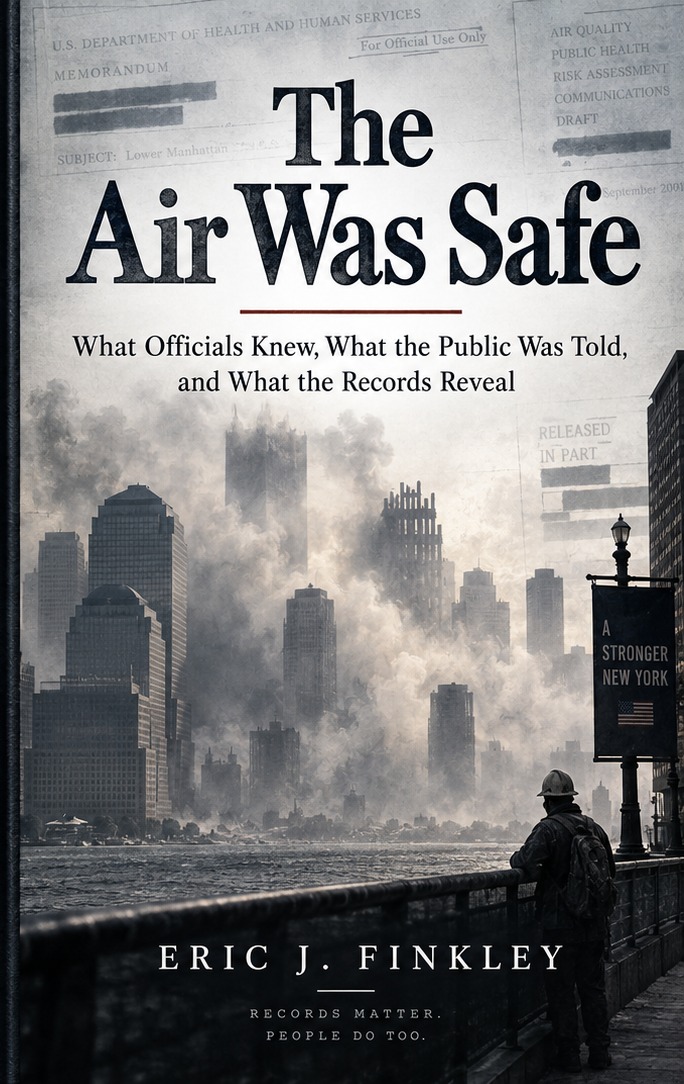
The Air Was Safe
What Officials Knew, What the Public Was Told, and What the Records Reveal
The Air Was Safe examines one of the most consequential questions left by the aftermath of September 11, 2001: what did government agencies know about environmental hazards in Lower Manhattan, what did they tell the public, and when?
Drawing on public records, environmental data, oversight reports, archival material, and municipal documents, Eric J. Finkley reconstructs the relationship between the information being collected after the World Trade Center collapse and the public assurances being issued at the same time. The book follows the record closely, including the limits and qualifications that did — and did not — appear in official communications.
The investigation is not built around a conspiracy claim. It is built around documentation. EPA Office of Inspector General reports later examined whether available monitoring data supported major public communications and found that EPA’s broad reassurance to the public did not always convey important qualifications about exposure, population, indoor versus outdoor conditions, and particular pollutants. The book places those official findings alongside the developing environmental record and the decisions made under extraordinary pressure.
The Air Was Safe asks readers to look at how institutions communicate risk when certainty is incomplete, how language can narrow or widen public understanding, and what accountability looks like when the consequences unfold over years. It is a records-based investigation into government knowledge, public reassurance, environmental health, and the long memory of New York after September 11.